Thursday, February 6, 2025

GREAT MATHEMATICIANS


Nicolaus II Bernoulli (also spelled as Niklaus or Nikolaus; 6 February 1695 in Basel – 31 July 1726 in Saint Petersburg) was a Swiss mathematician as were his father Johann Bernoulli and one of his brothers, Daniel Bernoulli. He was one of the many prominent mathematicians in the Bernoulli family.

Nicolaus worked mostly on curves, differential equations, and probability. He was a friend and contemporary of Leonhard Euler, who studied under Nicolaus' father. He also contributed to fluid dynamics.

He was older brother of Daniel Bernoulli, to whom he also taught mathematics. Even in his youth he had learned several languages. From the age of 13, he studied mathematics and law at the University of Basel. In 1711 he received his Master's of Philosophy; in 1715 he received a Doctorate in Law. In 1716-17 he was a private tutor in Venice. From 1719 he had the Chair in Mathematics at the University of Padua, as the successor of Giovanni Poleni. He served as an assistant to his father, among other areas, in the correspondence over the priority dispute between Isaac Newton and Leibniz, and also in the priority dispute between his father and the English mathematician Brook Taylor. In 1720 he posed the problem of reciprocal orthogonal trajectories, which was intended as a challenge for the English Newtonians. From 1723 he was a law professor at the Berner Oberen Schule. In 1725 he together with his brother Daniel, with whom he was touring Italy and France at this time, was invited by Peter the Great to the newly founded St. Petersburg Academy. Eight months after his appointment he came down with a fever and died. His professorship was succeeded in 1727 by Leonhard Euler, whom the Bernoulli brothers had recommended. His early death cut short a promising career.

He was born on this day in 1695 (FEBRUARY 6, 1695).

GREAT LIVES

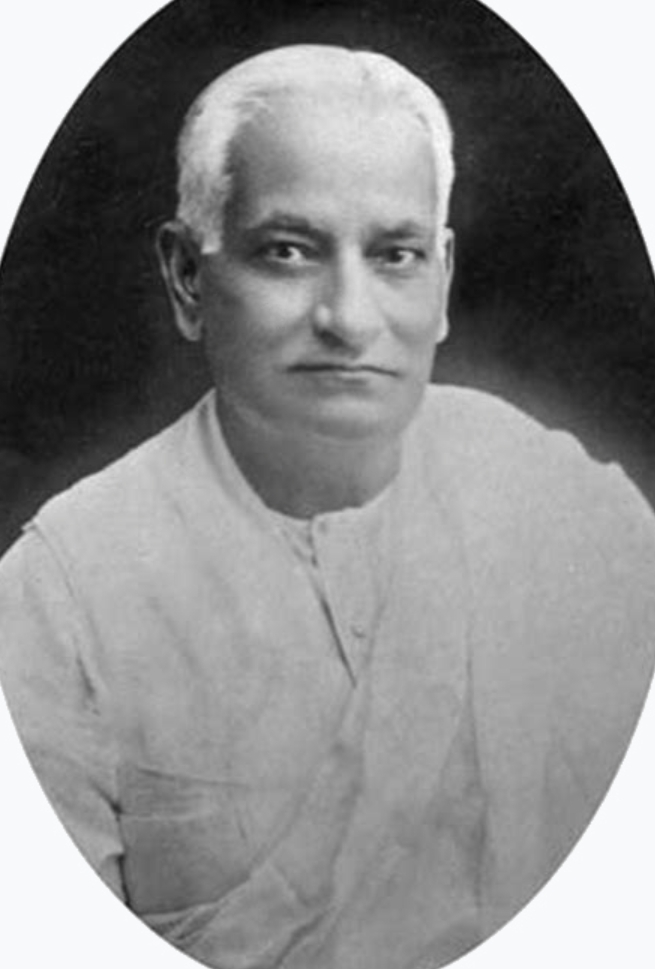
Motilal Nehru (6 May 1861 – 6 February 1931) was an Indian lawyer, activist, and politician affiliated with the Indian National Congress. He served as the Congress President twice, from 1919 to 1920 and from 1928 to 1929. He was a patriarch of the Nehru-Gandhi family and the father of Jawaharlal Nehru, India's first Prime Minister and grandfather of Indira Gandhi, another Prime Minister of India. Also the great-grandfather of the present Leader of the Opposition in Indian Parliament.

He passed away on this day in 1931 (FEBRUARY 6, 1931).

Wednesday, February 5, 2025

AMERICAN STATESMEN


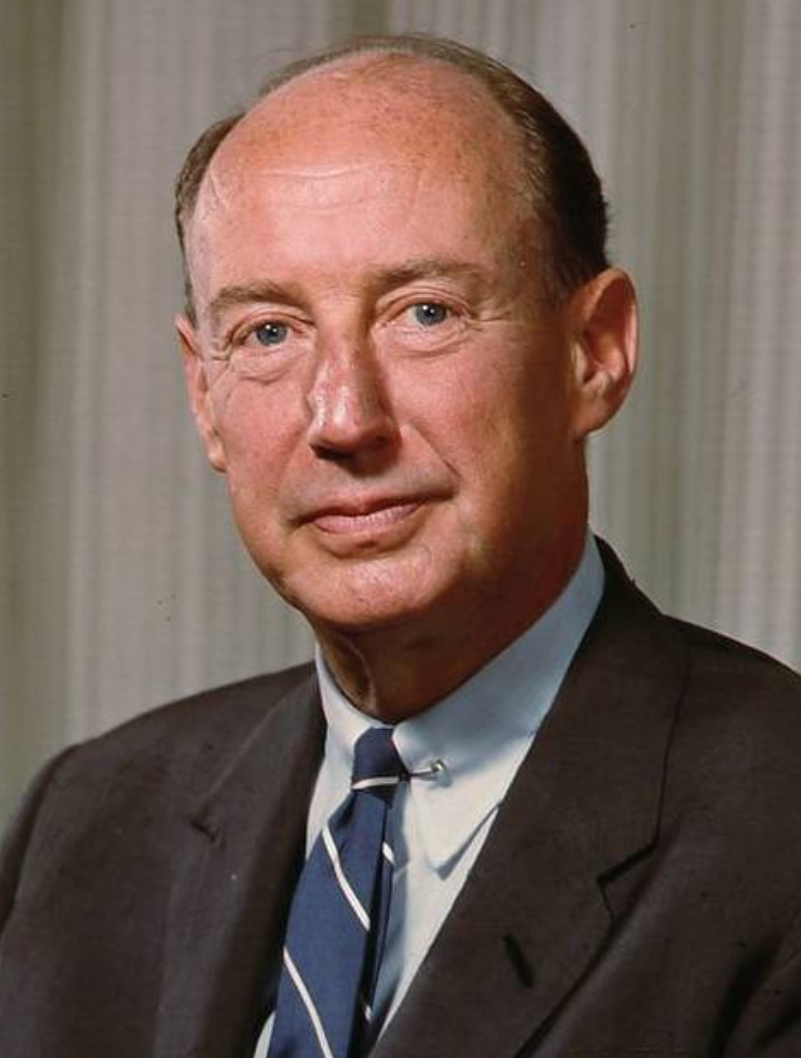
Adlai Stevenson, American Statesman, was born on this day.. February 5, 1900

Adlai Ewing Stevenson II was an American politician and diplomat and who was the United States ambassador to the United Nations from 1961 until his death in 1965. 

Born: 5 February 1900, Los Angeles, California, United States
Died: 14 July 1965 (age 65 years), London, United Kingdom
Previous offices: United States Ambassador to the United Nations (1961–1965), Governor of Illinois (1949–1953)
Party: Democratic Party
Spouse: Ellen Borden (m. 1928–1949)
Education: Northwestern Pritzker School of Law (1926) · See more
Children: Adlai Ewing Stevenson III, John Fell Stevenson, Borden Stevenson

Grateful thanks to Wikipedia, the Free Encyclopedia 

Thursday, January 30, 2025

REMEMBERING EMILY DICKINSON

THE GREAT CURIE FAMILY

NOBEL LAUREATE KARY MULLIS


Remembering biochemist Kary Mullis, who discovered polymerase chain reaction (PCR). 

Mullis was tired. He was out driving a distance he had driven so many times that he could drive it in his sleep. It was dark and his thoughts wandered. After a while, all the pieces of the puzzle fell into place. He finally had to stop his car to think properly.

Mullis was awarded the chemistry prize for his invention of the process known as polymerase chain reaction (PCR), in which a small amount of DNA can be copied in large quantities over a short period of time. By applying heat, the DNA molecule's two strands are separated and the DNA building blocks that have been added are bonded to each strand. With the help of the enzyme DNA polymerase, new DNA chains are formed and the process can then be repeated. PCR has been of major importance in both medical research and forensic science.

Read more about how Mullis discovered PCR: https://bit.ly/2F53qwS

Tuesday, January 28, 2025

Thursday, January 16, 2025

GREAT SCIENTISTS

Paul Dirac wasn't just a brilliant theoretical physicist; he was a man whose very presence sparked fascination and bewilderment. Often referred to as “the strangest man in the world” by his colleagues, this title was coined by Niels Bohr, who had the privilege—and challenge—of working with Dirac. Their relationship, initially professional, eventually blossomed into a human bond marked by moments that only someone like Dirac could inspire.

Dirac’s brilliance wasn’t just in his groundbreaking contributions to physics, but in his extraordinarily peculiar approach to life itself. His communication style was as precise and unembellished as his theories. Niels Bohr, struggling to complete a scientific paper, once confessed, “I don’t know how to go on.” Dirac, ever the purist in logic, responded coldly, “I was taught in school that you should never start a sentence without knowing the end.” 

And this stark, almost robotic demeanor wasn’t limited to his work. At one dinner, a fellow guest casually remarked, “Nice evening, isn’t it?” Dirac, without missing a beat, stood up, walked to the window to check the weather, and returned with the uncharacteristically succinct reply: “Yes.” 

But it was his social awkwardness that painted him as the quintessential oddball. At a Copenhagen party, Dirac proposed a theory on the optimal distance from a woman’s face at which it appears most attractive—backed by his own research, of course. His response to a curious colleague’s question about his personal experience was both absurd and perfectly Dirac: “About that close,” he said, holding his palms about a meter apart. 

Then there was the famous incident at the University of Toronto, when, after delivering a lecture, he was asked a question by a student. Dirac’s response? “This is not a question, it is an observation. Next question, please.”

Yet, despite all his brilliance, Dirac's discomfort with philosophy, literature, and even religion was profound. He dismissed poetry as “saying something that everyone already knows in words no one can understand” and offered a scathing critique of religion, claiming that scientists must acknowledge its absurdity. In Dirac’s worldview, God may have used extraordinary mathematics to create the universe, but it was Dirac who, humorously, became known as "His prophet," according to his contemporary Wolfgang Pauli.

In every moment, Dirac's life seemed to blur the line between genius and eccentricity, leaving those who encountered him to wonder: was he a physicist of the highest order, or simply the strangest man to ever walk the earth?

#quantumphysics #dirac

GREAT LIVES


Tuesday, January 14, 2025